

Rotator Cuff Pain and Injury Treatment on Long Island
Rotator cuff pain is one of the most common reasons adults on Long Island see an orthopedic specialist. The rotator cuff is the group of four muscles and tendons that stabilizes your shoulder joint and lets you lift, reach, and rotate your arm — which means when it’s injured, almost everything from sleeping to throwing a ball becomes painful. Dr. Michael Sileo, a board-certified orthopedic surgeon and Castle Connolly Top Doctor, diagnoses and treats rotator cuff injuries at his offices in East Setauket and Commack, NY.
What Causes Rotator Cuff Pain?
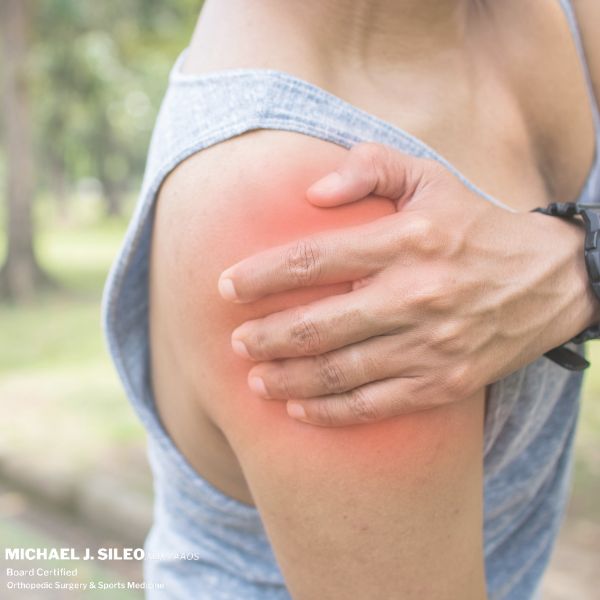
Rotator cuff pain develops when one of the cuff tendons becomes irritated, inflamed, or torn. Most injuries build gradually through repetitive strain — overhead work, throwing sports, lifting, or painting — while others happen suddenly from a fall or a single heavy lift. Natural wear and tear with age also plays a major role, as rotator cuff tendons fray over time and become more vulnerable. Bone spurs can narrow the space the tendons move through, creating shoulder impingement that grinds against the tendon with every motion. Left untreated, irritation can progress from tendinitis to a partial tear, and eventually to a complete tear.
Symptoms of a Rotator Cuff Injury
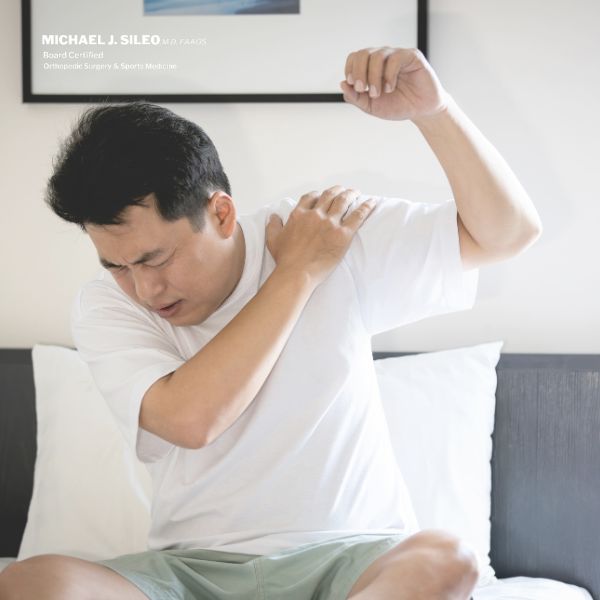
The most telling sign is a dull, aching shoulder pain that worsens when you lift or lower your arm — and especially when you try to sleep on the affected side. Many patients also notice weakness in the arm, a limited range of motion, or clicking and popping inside the shoulder joint. If shoulder pain lingers beyond a week or two, or weakness makes everyday tasks difficult, it’s time to have it evaluated.
Types of Rotator Cuff Injuries
Rotator Cuff Tendinitis and Impingement
Tendinitis occurs when the rotator cuff tendons become inflamed, often because impingement causes them to rub against the bones of the shoulder during movement. Caught early, tendinitis usually responds well to conservative care — rest, anti-inflammatories, and physical therapy — and treating it promptly can prevent it from progressing into a tear.
Partial and Complete Rotator Cuff Tears
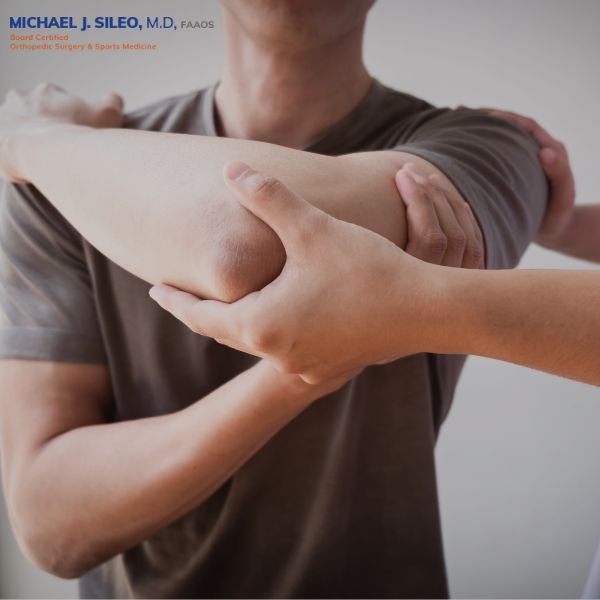
A torn rotator cuff happens when a cuff tendon pulls away from the humerus (upper arm bone). In a partial tear, the tendon is damaged but still attached; in a complete (full-thickness) tear, it separates entirely from the bone, typically causing more significant pain and weakness. A physical exam combined with imaging — an X-ray or MRI — allows Dr. Sileo to confirm exactly which injury you have and how severe it is.
How Dr. Sileo Treats Rotator Cuff Pain
Conservative Treatment First
For most patients, treatment starts without surgery. Dr. Sileo typically begins with physical therapy focused on restoring range of motion, strengthening the muscles that support the shoulder blade and joint, and reducing stress on the injured tendon. Activity modification, anti-inflammatory medication, and targeted injections can relieve pain while the shoulder heals. As a sports medicine specialist, Dr. Sileo also builds return-to-play rehabilitation plans for athletes who need to get back on the field safely.
When Rotator Cuff Surgery Is Needed
Surgery is reserved for complete tears, tears that haven’t responded to conservative care, or patients with ongoing pain and weakness that limit an active lifestyle. Dr. Sileo performs rotator cuff repair using minimally invasive arthroscopy whenever possible, with open repair for large or complex tears. In cases of extensive joint damage, reverse shoulder replacement may be the right option. Recovery takes time, but with a structured rehab program, most patients regain their strength and return to normal activity. You can learn more about the full range of shoulder conditions and treatments Dr. Sileo offers.
If you’re dealing with shoulder stiffness rather than weakness, your pain may stem from a different condition — read about frozen shoulder (adhesive capsulitis) and how it’s treated. And for practical guidance after a new injury, see our tips for managing a rotator cuff injury.
Frequently Asked Questions About Rotator Cuff Pain
Can a rotator cuff tear heal on its own?
No — a torn tendon rarely reattaches on its own. Minor tendinitis and partial injuries can improve significantly with rest and physical therapy, but a complete tear typically requires surgical repair to restore full strength.
What does rotator cuff pain feel like?
Most patients describe a dull ache deep in the shoulder that sharpens when lifting the arm overhead or reaching behind the back, often with weakness and pain that disrupts sleep on the affected side.
How long does rotator cuff recovery take?
With conservative treatment, many patients improve within 6 to 12 weeks. After rotator cuff surgery, full recovery usually takes 4 to 6 months, depending on the size of the tear and your rehabilitation program.
Do I need an MRI for rotator cuff pain?
Not always. Dr. Sileo starts with a physical exam and may order an X-ray to rule out arthritis or bone spurs. An MRI is used when a tendon tear is suspected, and imaging will guide the treatment plan.
When should I see a doctor for shoulder pain?
If shoulder pain lasts more than a week or two, wakes you at night, or comes with weakness or loss of motion, schedule an evaluation. Early treatment of rotator cuff injuries prevents small problems from becoming surgical ones.
Schedule a Rotator Cuff Evaluation on Long Island
Don’t let rotator cuff pain keep you from the activities you love. Dr. Michael Sileo evaluates and treats shoulder injuries at two convenient Long Island locations: 6 Technology Drive, Suite 100, East Setauket, NY 11733, and 312A Commack Road, Commack, NY 11725. Call (631) 689-4189 or schedule an appointment online today.