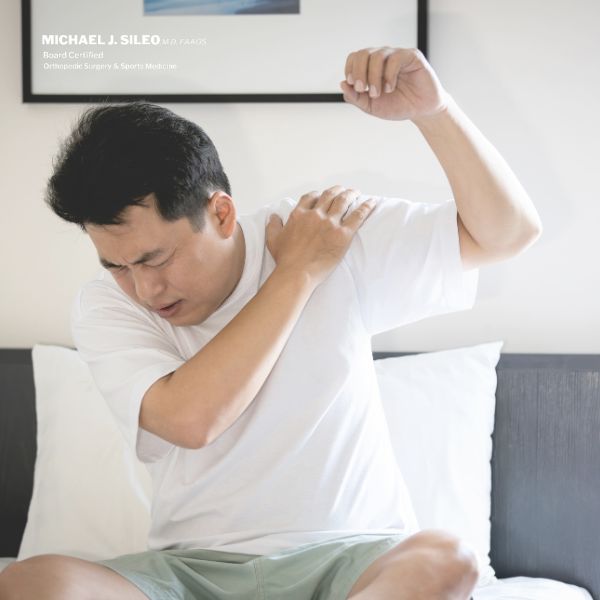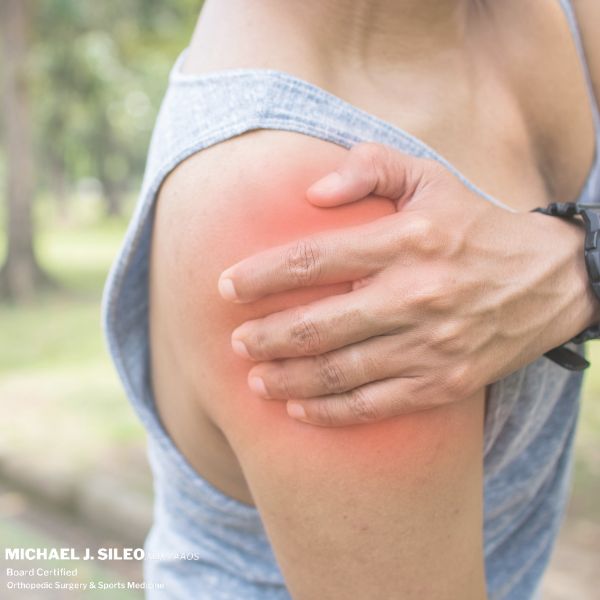


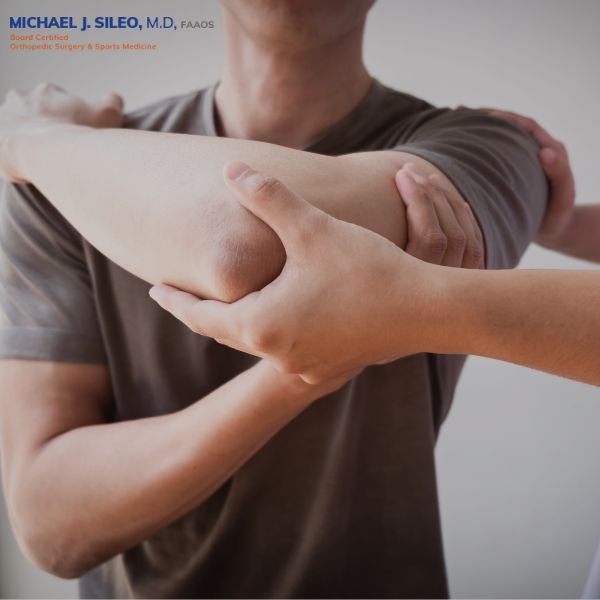
If you’re dealing with a rotator cuff injury, some of the most common gym exercises can make it worse. Movements that force the arm overhead, load the shoulder in a pinched position, or press heavy weight through an unstable joint all put direct stress on the injured tendons. Below are the exercises to avoid while your rotator cuff heals — and what you can safely do instead.
The rotator cuff is a group of four muscles and tendons that hold the ball of your shoulder centered in its socket. When one of those tendons is inflamed or torn, continuing to train through the pain doesn’t build strength — it deepens the injury. That’s true whether you have tendinitis, a partial tear, or a full-thickness tear. You can learn more about how these injuries are diagnosed and treated on our rotator cuff injury treatment page.
Overhead Presses
Military presses, dumbbell shoulder presses, and push presses drive the arm directly overhead under load — the single most stressful position for an injured rotator cuff. The tendons are compressed beneath the acromion (the bony roof of the shoulder) at the exact moment they’re working hardest. Skip all overhead pressing until you’ve been cleared.
Behind-the-Neck Movements
Behind-the-neck pulldowns and behind-the-neck presses force the shoulder into extreme external rotation. Even healthy shoulders tolerate these poorly; an injured cuff tolerates them worst of all.
Upright Rows
Pulling a bar or dumbbells up toward your chin rotates the shoulder inward while lifting the arm — a combination that pinches the rotator cuff tendons with every rep. This is one of the most common aggravators we see in patients who “worked through” early shoulder pain.
Heavy Bench Press and Chest Flys
Deep pressing and wide flys stretch the front of the shoulder under load and demand stability the injured cuff can’t provide. If pressing is pain-free at all, it’s only in a limited range with light weight — and that’s a decision to make with your doctor or physical therapist, not by feel alone.
Dips
Dips push the shoulder into deep extension while supporting your full body weight. For an irritated or torn rotator cuff, that’s one of the fastest ways to turn a manageable injury into a worse one.
Everyday Movements That Quietly Make It Worse
It’s not just the gym. Repeated overhead reaching, carrying heavy bags on the affected side, and sleeping directly on the injured shoulder all keep the tendons irritated. Small adjustments — reaching with the other arm, switching carrying sides, sleeping on your back or opposite side — give the cuff a real chance to calm down.
What to Do Instead
Rest doesn’t mean total immobilization — a shoulder that never moves stiffens, and prolonged stiffness can lead to problems of its own, as we covered in our post on frozen shoulder symptoms, causes, and treatments. Gentle, pain-free motion is usually encouraged early: pendulum swings, supported range-of-motion work, and isometric exercises that activate the cuff without moving the joint. The right progression depends on which tendon is injured and how badly, which is why a proper evaluation matters before starting any rehab program. The American Academy of Orthopaedic Surgeons offers a helpful overview of rotator cuff tears for patients who want a deeper look at the anatomy.
When to See a Doctor
See an orthopedic specialist if your shoulder pain lasts more than a few weeks, wakes you at night, or comes with weakness — especially trouble lifting the arm. Those are signs the injury may be more than simple inflammation, and early treatment consistently leads to better outcomes. Dr. Sileo treats the full range of shoulder conditions, from tendinitis to full-thickness tears requiring surgical repair.
Frequently Asked Questions
Can I still work out with a rotator cuff injury?
Often, yes — but not through pain. Lower-body training and pain-free movements are usually fine, while overhead pressing, upright rows, and dips should be avoided until you’re evaluated and cleared.
Will a rotator cuff tear heal on its own?
Tendinitis and some partial tears improve with rest, activity modification, and physical therapy. Full-thickness tears do not reattach on their own and may require surgery, which is why an accurate diagnosis matters.
How long should I avoid these exercises?
It depends on the severity of the injury. Mild tendinitis may settle in a few weeks; tears take longer. Return to loading should be gradual and guided by your doctor or physical therapist — not by the calendar alone.
What is the safest exercise for a rotator cuff injury?
Pendulum swings and gentle isometric exercises are typically the safest starting points, because they keep the shoulder moving without stressing the injured tendon. Your specific program should come from an evaluation, not a generic list.
Shoulder Pain That Isn’t Going Away? See Dr. Sileo
If shoulder pain is limiting your workouts, your sleep, or your daily life, don’t wait for it to get worse. Dr. Michael J. Sileo is a board-certified orthopedic surgeon and sports medicine specialist treating rotator cuff injuries across Long Island.
East Setauket: 6 Technology Drive, Suite 100, East Setauket, NY 11733
Commack: 312A Commack Rd, Commack, NY 11725